Showing posts with label book club. Show all posts

Thursday, May 24, 2018

Book Club Discussion: Alas, Babylon by Pat Frank

Unsure of what your next book club read should be? Not sure how to get a good discussion started during book club? Don't want to waste time finding "inspirational" quotes to share with your club? You've come to the right place. We've got you covered. Today's Book Club Discussion is centered around Alas, Babylon by Pat Frank.

Why should this be your next book club read?

  1. This has a fascinating and somewhat dated view of nuclear warfare and it can bring up interesting discussions of how conversations around nuclear warfare have changed or how some of the science mentioned by Frank was not entirely accurate.
  2. It's not your typical sci-fi - it's very much centered around the "what if" of nuclear apocalypse and after that, it's just people trying to make it work. Plus, since it doesn't have a ton of sci-fi tropes, readers who don't usually enjoy sci-fi will be more likely to enjoy this.
  3. This book is wholly centered on what people would do if the world were to end - and it makes for a personal read so you can put yourself in the character's shoes and wonder how you'd survive.
  4. This is a great start to talking about emergency preparedness - a topic which some people are really passionate about and which other people know almost nothing about. But this book will definitely motivate your readers to get thinking about preparedness.

Alas, Babylon

Author information: (taken from HarperCollins' websitePat Frank (1908–1964) is the author of the classic postapocalyptic novel Alas, Babylon, as well as the Cold War thriller Forbidden Area. Before becoming an author, Frank worked as a journalist and also as a propagandist for the government. He is one of the first and most influential science fiction writers to deal with the consequences of atomic warfare.

(taken from the Florida Backroads Travel BlogPat Frank was born Harry Hart Frank in Chicago in 1908 and died in Atlantic Beach, Florida in 1964. He is not well known today as one of the leading Florida authors of his time, but he really was. 
He spent some of his life living in Tangerine, Florida, a small rural community a couple of miles south of Mount Dora. 
It was here that he wrote his best selling novel, Alas Babylon. This novel immediately gave him recognition as one of the most famous Florida authors. He wrote this novel about survivors of a nuclear holocaust during the peak of the Cold War in 1959. Many Americans were required to read it in high school or college. The novel is a classic story about how people cope with disasters and deal with the darker side of human nature. Many observers believe that the novel's fictitious town of Fort Repose is actually based on Mount Dora, Florida. After attending the University of Florida for two years, Pat began his career as a reporter at the Jacksonville Journal in Florida. He later worked for the New York Journal and the Washington Herald. While with the Herald, he became very knowledgeable about government and world affairs, and eventually became a government consultant. Like an early Tom Clancy, he had an ability to portray government secrets in a very realistic way. When World War Two ended, Pat started a full time career as a writer.

Book inspiration: (taken from Grade Saver) Alas, Babylon tells the story of what would have happened if the Cold War did result in a nuclear attack, set entirely in the small town of Fort Repose, Florida, which is based on the real city of Mount Dora, Florida. The novel was published in 1959, making it one of the first apocalyptic novels of the nuclear age. To this date the novel is still extremely popular with science fiction and apocalyptic literature fans. The name of the book is taken from the Bible passage Revelation 18:10.

According to Frank himself, a simple question asked by a friend inspired this work. "What do you think would happen if the Russkies hit us when we weren't looking—you know, like Pearl Harbor?" Frank's recent experience working with the government and military during the World War II meant that things of this nature were constantly on his mind, and he used his expertise while writing this novel.


Setting information: This series of articles on Pistolville (a town just outside Mount Dora, FL, historically occupied by poor black workers) help give more context to the racial and socioeconomic setting of Alas, Babylon and how the area has changed in the past few decades.


Discussions questions:
  • Before the bomb, Lib tells Randy 'I think you ought to go to New York or Chicago or San Francisco or any city with character and vitality. You should go to work. This place is no good for you, Randy. The air is like soup and the people are like noodles. You're vegetating. I don't want a vegetable. I want a man.' How does Randy change after the Day? What opportunities are available to him in a post-bombing society that were not available to him pre-bomb?
  • When this book was published in 1959, many women were confined to the home and to specific occupations. While many women in this book are employed or have been educated, their opportunities are limited. How are their opportunities changed after the Day? Are there broader spaces for women after the Day or are their opportunities more limited? Are these opportunities different for each woman?
  • After the Day, the library becomes an important part of society in a way that it wasn't before. Today, we rely on the internet far more than we do on books. Do you think people today would utilize the library in the same way as characters in the book do? Are there other ways to learn available for people today to use?
  • Missouri and Malachai are an important part of the Randy's group and contribute and benefit alongside everyone else. However, in 1959, they would not have been part of white society except as laborers. How does the Day change their place in society? Does the Day put them on a level playing field with everyone else, or do they still have to work twice as hard to have a place in society? Is racism still as prevalent in their new society as it was in their old one?
  • Today, we know that nuclear bombs will likely destroy all electronics. However, in 1959, this would not have been widely known. Given this information, would things have changed in the book if electronics had ceased to work? How might that change how the characters handle post-Day life?
  • Which characters do you feel are most suited to survive after the Day? Which ones need others to help them survive? Which traits to our surviving characters share that enable them to continue on?
  • In Alas, Babylon, Josephine Vanbruuker-Brown was secretary of the Department of Health, Education and Welfare before the Day. She eventually becomes president because everyone in line before her has died or cannot be found. How would you feel if the current secretary of Health and Human Services or Education was made president? Do you feel they have the knowledge and background necessary to lead the country?
  • In the book, Rita begins collecting valuable items, thinking that she'll use them after things are over. Randy tells her that these things have no value in their new society. In our society today, do things like gold and jewels have value, or is it simply that we put value on them? If the events in this book were to take place today, what "valuable" items would people collect?
  • How would you survive in the event of a nuclear apocalypse? Did any of the actions characters took in the book surprise or inspire you? Is there anything you plan to do/buy to be better prepared in case of emergencies?
  • How do you think this book would be different if it took place today? 
  • How do you think this book influenced the direction of science fiction? Do you think it influenced post-apocalyptic media (i.e. books, movies, video games, etc)?

Have you read this book and if so, did you enjoy it? What about this book makes it a valuable book club read? 

Thursday, May 17, 2018

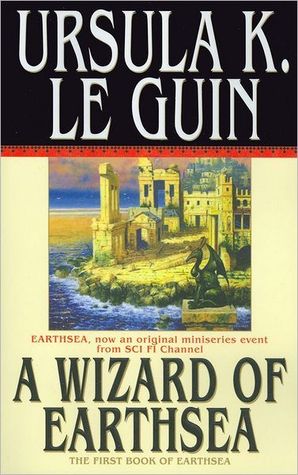
Book Club Discussion: A Wizard of Earthsea by Ursula Le Guin

Unsure of what your next book club read should be? Not sure how to get a good discussion started during book club? Don't want to waste time finding "inspirational" quotes to share with your club? You've come to the right place. We've got you covered. Today's Book Club Discussion is centered around A Wizard of Earthsea by Ursula Le Guin.


Why should this be your next book club pick? Well, for a few simple reasons:

  1. This is classic fantasy and you need to recommend it to everyone who didn't read it as a child.
  2. It's incredibly well-written and has such an intricate world and plot.
  3. Le Guin is an early author who valued diversity in her writing and world-building, so the characters in this book are quite diverse (especially when you take into account when Le Guin was writing). 
  4. There are life lessons to be learned from this book and they aren't too heavy-handed.
  5. It's a fairly simple and accessible read, so you should be able to recommend it to anyone who is able to read chapter books and they should understand and will probably enjoy it.

A Wizard of Earthsea (Earthsea Cycle, #1)

If you want to run a book discussion centered around Le Guin's work, look no further than her website - it's a treasure trove of information about the author, her life, and her work. There are interview and speech transcripts, documentaries, links to her blog, lists of awards she won (and she won A LOT of awards) and endless amounts of things to parse through. Here, I've gone through some of what I think will be most fruitful to a book club discussion and linked it in here.

Author information: (taken from the author's website) Ursula Kroeber was born in 1929 in Berkeley, California, where she grew up. Her parents were the anthropologist Alfred Kroeber and the writer Theodora Kroeber, author of Ishi. She went to Radcliffe College and did graduate work at Columbia University. She married Charles A. Le Guin, a historian, in Paris in 1953; they have lived in Portland, Oregon, since 1958, and have three children and four grandchildren.

Ursula K. Le Guin writes both poetry and prose, and in various modes including realistic fiction, science fiction, fantasy, young children’s books, books for young adults, screenplays, essays, verbal texts for musicians, and voicetexts. She has published seven books of poetry, twenty-two novels, over a hundred short stories (collected in eleven volumes), four collections of essays, twelve books for children, and four volumes of translation. Few American writers have done work of such high quality in so many forms.

Most of Le Guin’s major titles have remained continuously in print, some for over forty years. Her best known fantasy works, the six Books of Earthsea, have sold millions of copies in America and England, and have been translated into sixteen languages. Her first major work of science fiction, The Left Hand of Darkness, is considered epoch-making in the field for its radical investigation of gender roles and its moral and literary complexity. Her novels The Dispossessed and Always Coming Home redefine the scope and style of utopian fiction, while the realistic stories of a small Oregon beach town in Searoad show her permanent sympathy with the ordinary griefs of ordinary people. Among her books for children, the Catwings series has become a particular favorite. Her version of Lao Tzu’s Tao Te Ching, a translation she worked on for forty years, has received high praise. Her poetry has drawn increasing critical interest; Finding My Elegy, published in 2012, contains poems selected from previous volumes and new work.

Three of Le Guin’s books have been finalists for the American Book Award and the Pulitzer Prize, and among the many honors her writing has received are a National Book Award, five Hugo Awards, five Nebula Awards, SFWA’s Grand Master, the Kafka Award, a Pushcart Prize, the Howard Vursell Award of the American Academy of Arts and Letters, the L.A. Times Robert Kirsch Award, the PEN/Malamud Award, the Margaret A. Edwards Award, and in 2014 the National Book Foundation Medal for Distinguished Contribution to American Letters.

Le Guin has taken the risk of writing seriously and with rigorous artistic control in forms some consider sub-literary. Critical reception of her work has rewarded her courage with considerable generosity. Harold Bloom includes her among his list of classic American writers. Grace Paley, Carolyn Kizer, Gary Snyder, and John Updike have praised her work. Many critical and academic studies of Le Guin’s work have been written, including books by Elisabeth Cummins, James Bittner, B.J. Bucknall, J. De Bolt, B. Selinger, K.R. Wayne, D.R. White, an early bibliography by Elizabeth Cummins Cogell and a continuation of the bibliography by David S. Bratman.

Le Guin leads an intensely private life, with sporadic forays into political activism and steady participation in the literary community of her city. Having taught writing workshops from Vermont to Australia, she is now retired from teaching. She limits her public appearances mostly to the West Coast.

As of 2015, Le Guin’s most recent publications include The Unreal and the Real, 2012, and Steering the Craft: A 21st-Century Guide to Sailing the Sea of Story, 2015. Forthcoming in December 2015 is a new volume of poetry, Late in the Day. For the full list of the major publications see this website: About Ursula K. Le Guin


Book inspiration: (from Ursula LeGuin's Magical World of Earthsea by Jan M. Griffin) LeGuin began the trilogy when a publisher invited her to write a fantasy for children. She developed the novels from stories she had written earlier about the world of Earthsea, a place similar to the United States in climate, and much like the fifteenth century in its lack of industrialization.

(from Schmoop) To understand A Wizard of Earthsea, we have to start by imagining what the world was like before the Harry Potter books (we know, tough to imagine). Before the first Harry Potter books came out, if someone said "wizard," your mind probably didn't pull up the image of a teen at a boarding school. Back then, when someone said "wizard," instead you likely pictured an old man with a long white beard and immense wisdom – you know, someone like Gandalf from Lord of the Rings.

Now imagine this: it's 1968, practically eons before Harry Potter, and Ursula K. Le Guin wants to know where all these old men with long white beards and immense wisdom come from. Are they born like that? Or do they start out as regular kids who have to learn how to be wise and grow beards? This curiosity on her part turned into the inspiration for A Wizard of Earthsea.

In Earthsea, Le Guin takes a wizard who will one day be immensely powerful, and she shows us what he's like as a teen and a young man. In her story, this wizard childhood isn't terribly pretty: Ged will one day be wise and kind (and bearded), but when he's young, he's reckless and proud and gets into some terrible trouble that follows him and nearly kills him.

That's a pretty serious change to the fantasy story, but Le Guin's A Wizard of Earthsea makes several other interesting changes to the old fantasy standards too. Take this example: you know how in many fantasy stories, we have good and evil fighting, and (hopefully) good wins in the end? Gandalf (and team) fights Sauron, Aslan defeats the White Witch, and Harry Potter takes care of Voldemort – all great. But in A Wizard of Earthsea, it's not so easy to defeat evil. In fact, it's sometimes hard to even know what's good and what's evil in the first place. In that way, it's a lot like Le Guin's other works, which tend to avoid simple moral victories. At the end, it turns out that what we thought was evil was really a part of the hero himself.


Discussion questions:

  • Le Guin is known for choosing not to write about the conflict between good and evil, but about inner conflicts. In A Wizard of Earthsea, do you feel as though the inner conflict of Ged outweighs the outer conflict against the being he's summoned? (This interview may provide more clarification on her views of Good vs. Evil)
  • How do you think this book has influenced changes in children's literature and the fantasy genre in general?
  • When this book was published in 1968, diversity in fictional characters was not nearly as discussed as it is today. As an American author, Le Guin was writing during a time of change regarding racial acceptance (the Civil Rights Act was passed in 1964, just a few years earlier). Why do you think Le Guin chose to include characters of color in her books at this time?
  • Ultimately, Ged is forced to deal with the demons inside and to confront the consequences of his actions. As a reader, how did learning the true nature of the being Ged summoned change your perceptions of the story and of Ged?
  • In the book, names are of huge importance. “Who knows a man's name, holds that man's life in his keeping. Thus to Ged, who had lost faith in himself, Vetch had given him that gift that only a friend can give, the proof of unshaken, unshakeable trust.” Do names in reality hold power? Does giving your name to someone show some level of trust in them?
  • How do the various communities and lands differ from each other? Which land and culture did you connect most with? Which land and culture was most shocking to you?
  • Why do you think this became a fantasy/children's classic?
  • Have you read this book before? How was this reading different from previous readings?
  • “The truth is that as a man's real power grows and his knowledge widens, ever the way he can follow grows narrower: until at last he chooses nothing but does only and wholly what he must do.” How does this quote apply to Ged? Does it apply to Vetch or Ogion?
  • (quote taken from Jan M. Griffin's work, as mentioned earlier) Earthsea revolves around the principles of Taoism. As a self-proclaimed Taoist, LeGuin manufactures a world based on two of the main principles of Taoism: 1) the theory of inactivity in which one acts only when absolutely necessary, and 2) the relativity of opposites which is the belief that opposites are interdependent, and their interdependence results in the equilibrium. Where do you see these principles of Taoism in this book? Are there any characters who you see as opposites, and therefore interdependent?
  • Le Guin is also known for her love of Native American legends, as well as Norse Mythology. How have these influenced her work in this novel?

What did you think of this book? What kinds of things do you like to talk about during book discussions? What is your book club reading next?

Thursday, March 22, 2018

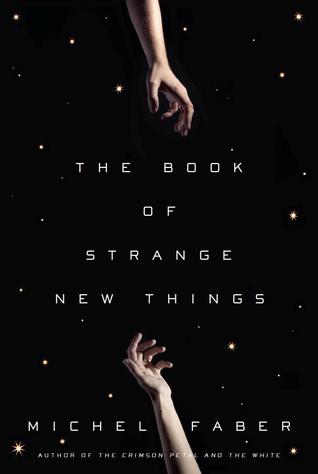
Book Club Discussion: The Book of Strange New Things by Michel Faber

Unsure of what your next book club read should be? Not sure how to get a good discussion started during book club? Don't want to waste time finding "inspirational" quotes to share with your club? You've come to the right place. We've got you covered. Today's Book Club Discussion is centered around The Book of Strange New Things by Michel Faber.

The Book of Strange New Things

Author information (taken from the author's website): Michel Faber has written seven other books, including the highly acclaimed The Crimson Petal and the White, The Fahrenheit Twins and the Whitbread-shortlisted novel Under the Skin. The Apple, based on characters in The Crimson Petal and the White, was published in 2006. He has also written two novellas, The Hundred and Ninety-Nine Steps and The Courage Consort, and has won several short-story awards, including the Neil Gunn, Ian St James and Macallan. Born in Holland, brought up in Australia, he lives in the Scottish Highlands.


Book inspiration: (Taken from The GuardianThe Book of Strange New Things, begun before Eva’s [Faber's wife] diagnosis, also underwent a radical shift. Faber started it in the wake of the Afghanistan and Iraq wars, when “I was so fed up with the almost invincible idiocy of the human race that I fantasised about writing a book that had no humans in it. So I was going to write a novel entirely set on another planet.” Then he hit on the idea of a man and woman “separated by an unimaginably vast distance. I thought of one of them going to another planet and the other one staying behind”. Peter, who travels to the Planet Oasis to preach to the Oasans, began life as a stand-in for the writer, who every day vanishes into his study and the unpassable distances of his own mind. Eva “lived on Planet Earth, and dealt with all the messy shit of daily life, and I was on Planet Art, creating my books in my sanctum sanctorum”.
When Eva got sick, the novel changed again: “It became much more about loss and the miracle of the body and also the tragic fragility of it, all in one.” One of the many unbridgeable differences between human and Oasan is that the aliens’ bodies lack the ability to repair themselves – if damaged in any way, they simply rot, like fruit. “Eva had one of the few cancers remaining that can’t be fixed. Which is horrifying, but shines a spotlight on the fact that almost everything that goes wrong with us can be fixed. We are immensely privileged to inhabit these little fleshy vehicles.”


Discussion questions
  • Being apart was wrong. Simply lying side by side did more for a relationship than words. A warm bed, a nest of animal intimacy. Words could be misunderstood, whereas loving companionship bred trust.” - Who is at fault as Bea and Peter's relationship begins to suffer? What factors play a part in driving them apart? Are these common relationship problems or are they unique to their situation? How could this quote apply to various relationships?
  • How does Faber juxtapose Bea’s hand injury (and Peter’s reaction to it) with Jesus Lover Five's hand injury (and the community’s reaction to it)? Do the differences in reactions tell us more about the differences in biology or the differences in societies?
  • How does the USIC "community" differ from the Oasan village? How do each of these differ from society on Earth?
  • Is it appropriate for Peter to give the Osans new names as they convert? Is it respectful of their cultural to introduce Earth religions and cultures to the Oasans?
  • How strange it was to be inside a machine again! All his life he’d been inside machines, whether he realised it or not. Modern houses were machines. Shopping centres were machines. Schools. Cars. Trains. Cities. They were all sophisticated technological constructs, wired up with lights and motors. You switched them on, and didn’t spare them a thought while they pampered you with unnatural services.”  - How do Peter's opinions towards machinery and human society change through his interactions with the Oasans? Is he correct in feeling that modern machinery is "unnatural"? 
  • Does Peter make the correct decision in the end? Where do his duties lie? Is Earth a lost cause?
  • What are your opinions on "aliens" being adopted into Earth religions? If religion is universal, should it be opened to all beings in the universe, or should Earth religions be left on Earth?
  • Faber has expressed that writing this book helped him deal with the passing of his wife. What parts of the book do you think helped Faber grieve? Does the fact that Faber lost his wife while he wrote this book change your thoughts on it?

What parts of a book club meeting are important to you? What do you like to discuss during meetings? Did you enjoy The Book of Strange New Things?