Showing posts with label review. Show all posts

Tuesday, July 17, 2018

Review: Apocalypse Nyx by Kameron Hurley

Apocalypse Nyx (Bel Dame Apocrypha #1.5, 1.7)
Released on July 17th, 2018 by Tachyon Publications
Available for purchase on Amazon

Move over Mad Max―here comes Nyx.

Ex-government assassin turned bounty-hunter, Nyx, is good at solving other people’s problems. Her favorite problem-solving solution is punching people in the face. Then maybe chopping off some heads. Hey―it’s a living.

Her disreputable reputation has been well earned. To Nyx’s mind, it’s also justified. After all, she’s trying to navigate an apocalyptic world full of giant bugs, contaminated deserts, scheming magicians, and a centuries-long war that’s consuming her future. Managing her ragtag squad of misfits has required a lot of morally-gray choices. 

Every new job is another day alive. Every new mission is another step toward changing a hellish future―but only if she can survive. 


ANNA'S REVIEW
★★★
3.5 stars.

There was a lot to like about this book (slash collection of short stories?) - it's written well, the characters are interesting and unique, and the world was really fantastic (set in a Middle Eastern-esque world and full of assassins and heists). It was an enjoyable read and made me interested in reading the rest of the series.

Nyx's character development was a bit of a sore spot for me, however. For most of this book, I was rooting for her to start making some changes in her life, even if they were minor ones. But I kept reading and Nyx kept going through the same motions she had in each story in the collection - getting annoyed with her team, lusting after someone in her team, making it clear that she doesn't care about her team members at all, barely completing the job, and sleeping with someone to blow off some steam. Each story had a unique job and some unique aspects to it, but the changes fell flat because Nyx was approaching each situation as exactly the same person. Finally, at the very end, Nyx experiences what could be counted as change, but it's unclear whether this is actually a chance for her to become a dynamic character, or just a new revelation of the character she already is. I would have loved to see some more changes and new experiences across the stories, but each story felt similar and that made it somewhat less enjoyable as I continued to read.

All that being said, this is a really great collection of heist and assassin-for-hire stories and is great fun for SFF-interested folks to read.


Have you read this book? Have you read Kameron Hurley's work before? What assassin books have you previously enjoyed? What are your thoughts on this book?

Wednesday, July 11, 2018

Review: Mystic Dragon by Jason Denzel

Mystic Dragon
Released by Tor on July 17, 2018
Available for purchase on Amazon

The second book in the enchanting epic fantasy series for fans of Robert Jordan from the founder of Dragonmount

Seven years have passed since Pomella AnDone became the unlikely apprentice to Mystic Grandmaster Faywong. Despite having attained significant accomplishments as a Mystic, Pomella feels incomplete. She laments that her Master isn’t teaching her quickly enough.

As a rare celestial event approaches, Pomella feels her lack of experience more than ever. The Mystical realm of Fayün is threatening to overtake the mortal world, and as the two worlds slowly blend together, Moth is thrown into chaos. People begin to vanish or are killed outright. Mystics from across the world gather to protect them, among them Shevia, a dark and brilliant prodigy whose mastery of the Myst rivals even that of the greatest High Mystics. 

Shevia will challenge Pomella in every possible way, from her mastery of the Myst to her emotional connection with Pomella's old friend Sim, in this fantasy adventure perfect for readers of Robert Jordan from one of the strongest voices in the Wheel of Time community.


ANNA'S REVIEW
★★

This book started on a really strong note and quickly got off track.

This book was interesting to begin with. Though it is technically a sequel, it didn't feel like one and it opens on an interesting magic system (where you harness Myst, which feels kind of like the Force) and a compelling action scene. And for the first several chapters, I was very engaged and really excited about this book. The characters were fascinating and their backstories really felt like they added to the world and to the story. And the magic system kept getting more complex and the politics of magic wielders really fascinated me. It was a slow build that really felt like it would pay off and I was really enjoying reading it.

And then, about halfway through, things changed suddenly. The slow crescendo picked up without warning and immediately went from a growing p to fff. It was an abrupt shift that felt forced and unnatural and it was unclear how we got from the first half to the second half. Suddenly, we're at what feels like the climax of the book, but we're only 2/3 through and it keeps building and building, but without any breaks or really any additional character development. It felt like the first half of the book was completely dedicated to setting the scene and getting to know characters and the second half was completely action. And that was unfortunate. Plus, the longer the action went on, the less sense it made. The ending came out of nowhere and really didn't make any sense and I felt like we had suddenly (again, everything in the second half is sudden and unexpected) come to a halt and the book was over. And I didn't even quite understand what had happened - there were no signs or clues of the twist ending that the author tried to throw in and so it really fell flat and felt forced.

It feels like this author excels at character development and struggles with coherent plot. Reading the characters' backstories and how they get to the action made a lot of sense and was really rewarding. As soon as we got away from character development and focused completely on THINGS ARE HAPPENING NOW, a lot was lost and it felt like an entirely different (and much worse) book.

I may be interested in giving this author a second try because I was so impressed with the first half of this book, but the second half made me lose a lot of faith in this author's ability to craft a coherent story and I'll be approaching his future books warily.


What are you looking for in a fantasy sequel? What magic systems appeal to you?

Tuesday, July 3, 2018

Review: Space Unicorn Blues by T.J. Berry

Space Unicorn Blues
Released by Angry Robot on July 3, 2018
Available for purchase on Amazon

A misfit crew race across the galaxy to prevent the genocide of magical creatures, in this unique science fiction debut.

Having magical powers makes you less than human, a resource to be exploited. Half-unicorn Gary Cobalt is sick of slavery, captivity, and his horn being ground down to power faster-than-light travel. When he's finally free, all he wants is to run away in his ancestors' stone ship. Instead, Captain Jenny Perata steals the ship out from under him, so she can make an urgent delivery. But Jenny held him captive for a decade, and then Gary murdered her best friend... who was also the wife of her co-pilot, Cowboy Jim. What could possibly go right?


ANNA'S REVIEW
★★


I have some mixed feelings about this very complicated and bizarre book.

Gary is half unicorn, half human and has just been released from prison when he gets pulled into a plot to deliver mysterious packages across the universe. Will he be able to let go of old grudges to complete the mission?

There was some good in this book, in spite of the 2 star rating. The world-building (or rather, universe building) was complex and interesting. It was a strange mix of science fiction and fantasy. Not only is there space travel, but typically fantastic creatures exist across the universe. The author obviously had put a lot of thought into the politics and cultures within the world. While things sometimes were confusing or a little too convoluted, for the most part, the universe was built well and was interesting to read about.

The diversity was also well-done. For the most part, it wasn't too heavy handed or down-played. Characters are accepting of their (and others') identities - except for the bigoted villains, of course. And there was a lot of diversity - different races, sexualities, and gender identities.

But....even with all that, this book had some serious issues. Below are some SPOILERS because I cannot stop myself from talking in-depth about the problems in this book.

The biggest issue I took was the poor development of characters. While the author obviously had some ideas about how characters were supposed to be, often the actions of the characters didn't fall in line with the overtly-mentioned aspects of their personalities.

Take Jenny, for example. Throughout the book, Jenny is shown to be a take-charge kind of person who never stops fighting. She always has a plan and is never afraid to fight for those she loves. This is all mentioned explicitly and shown implicitly throughout the book. However, at the beginning of the book, we are told that Jenny has spent the previous 10 years waiting around for Gary to get out of jail. She's bummed around doing small jobs, but couldn't do much else because she didn't have a ship. With everything that we're shown about Jenny's character throughout the book, this doesn't make any sense - she just sat around doing nothing for a decade and then she's ready to be a go-getter once again?

What also confused me was Jenny's feelings toward Bala - or magical creatures. Jenny is in a relationship with a magical tree/druid creature. However, it is told many times that Jenny (while in this relationship), took Gary (our half-unicorn character) captive for years and mistreated him. This discrepancy felt odd to me - why would Jenny be okay with Bala in some instances, but feel justified in taking one as a slave in others? If this discrepancy had been addressed head on, I would have felt better about it.. But it's never mentioned. And we're just told that, in the 10 years she did nothing, Jenny changed and now feels more sympathetic to Bala and their plight. But why didn't she feel that way the whole time she was married to a Bala who was losing rights and constantly on the run from the authorities? It made no sense.

Jim is another character I took issue with. His character makes little sense and entirely functions as a villain. He is very clear about his hatred for Gary throughout the entire book, but is okay moving forward with a plan to bring Gary on board and helps moves this plan along. It is only when Gary is back on board that Jim is shown to have a problem with Gary and starts doing little things to antagonize him. Why would Jim go along with this plan at all if he hated Gary? And if he chose to go along with it in spite of hating Gary, why wouldn't he try to kill Gary on sight?

Along those same lines, the author seemed to be unsure about whether Jim was supposed to be a quirky, but likeable character, or an evil villain. There are a lot of characters who are written to show both their good and bad characteristics, but Jim's character was not written well to show this balance. Obviously, most people have some good and some bad in them. But Jim's character felt disjointed when he was obsessed with grilled cheese in one paragraph and turning in Bala to the authorities in the next. It didn't feel like the same character. Also, grilled cheese isn't a personality trait and I wish the character of Jim had been fleshed out more than being 1) useless, 2) obsessed with grilled cheese sandwiches, and 3) evil.

And with that in mind, here is what confused me most- why are Jim and Jenny still hanging around together? Jenny is clear about thinking Jim is useless and sketchy. Jim gets irritated with Jenny. Jenny knows that Jim hates Gary. Why would Jenny invite Jim to help in a mission to rescue Gary with all that in mind? And why would Jim accept? On top of that, Jim and Jenny supposedly hung out for 10 years doing almost nothing or reconnected after 10 years to do this job - which makes no sense. Ten years is a long time - neither of them found any new connections or realized their incompatibility in that time? What's keeping them together - a love for Jim's deceased wife? Their relationship makes no sense, especially as it becomes more and more clear that Jim isn't useful on board and that Jenny doesn't trust him at all.

The writing is often unclear. It took me a long time understand the cultures and the universe because things were revealed just a little at a time, but in a very confusing and disorienting way. For the first 1/3 of this book, I really had no idea what was going on (partly because the first 5-6 chapters are a contest taking place in a bar that has no real impact on the rest of the story).

Overall, this is a fun book for people who enjoy silly sci-fi stories. But if you want good character development, don't pick up this book.


Have you read this book? Are you interested in reading this book? What do you look for in a science fiction story?

Friday, June 29, 2018

Review: City of Lies by Sam Hawke

City of Lies (Poison Wars #1)
Released by Tor on July 3rd, 2018
Available for purchase on Amazon

I was seven years old the first time my uncle poisoned me... 

Outwardly, Jovan is the lifelong friend of the Chancellor’s charming, irresponsible Heir. Quiet. Forgettable. In secret, he's a master of poisons and chemicals, trained to protect the Chancellor’s family from treachery. When the Chancellor succumbs to an unknown poison and an army lays siege to the city, Jovan and his sister Kalina must protect the Heir and save their city-state. 

But treachery lurks in every corner, and the ancient spirits of the land are rising...and angry.


ANNA'S REVIEW
★★★★

What an excellent fantasy debut!

This is a unique book. Many fantasy stories deal with all-out wars and very overt aggression. This story, while it did featured a siege, was a lot more concerned with subtle aggression - poison, political intrigue, spying, etc. And that made it very interesting and unique. None of our characters are paladins or warriors. In fact, they can barely hold weapons some of the time. Our main characters are much more concerned with learning about poison and finding hiding places to spy on people from. They aren't effective in the ways some fantasy characters typically are and I found that change refreshing and interesting.

The world in this story was really unique in some regards. The main city comes from a matriarchal society - women bear children and those children remain part of the woman's family. In fact, it seems that marriage is not a concern in this society at all - when a woman gives birth, there is no concern for the father and the children are raised within the large extended family. That was very unique and I wish this had been a bigger deal in the story - it's mentioned in passing a few times and comments are made about how weird it is when people leave their families (their aunts and uncles and mother, etc) to start their own family (two parents and children). Perhaps in future books, this will be addressed in more depth. The rest of the world was interesting, but not all that unique or significant. There are guilds that basically run the city. There's a lower class that's been treated unfairly by the ruling class and they want change. The "magic" system was interesting, though as a religion (which it is), it isn't that unique. But regarding it as magic makes it more interesting. Overall, it was an interesting world in so many capacities, but a fairly typical fantasy world in other capacities.

The main characters were the one part of this book that I didn't like. While most of the characters were written in interesting ways and had some personality, the two main characters just felt....meh. Our two main characters take turns narrating and there was nothing about their views of the world or their narrating voices that helped to tell them apart. Often, I'd have to go back to the chapter heading to remind myself who was narrating currently. I should have been far more attached to the main characters than I was and I should have been able to get a sense for their personalities and their wants and needs and interests, but most of what I learned about the main characters were things they revealed about each other - i.e. "Jovan cares so much about Tain," "Kalina is sickly and weak and needs me to take care of her," etc. There are ways to reveal your character without making other characters do the work of explaining them and I wish these characters had more clear personality.

Overall, this is a rewarding and interesting read and I'm excited to see more from this author.


Have you read this book? Are you interested in reading this book? What do you look for in a fantasy novel?

Tuesday, June 5, 2018

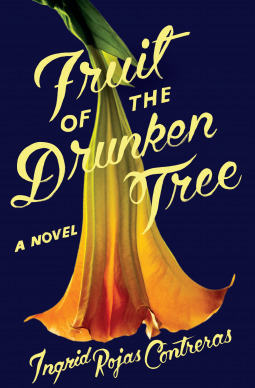
Review: Fruit of the Drunken Tree by Ingrid Rojas Contreras

Fruit of the Drunken Tree
Released by Doubleday on July 31, 2018
Available for purchase on Amazon

In the vein of Isabel Allende and Gabriel Garcia Marquez, a mesmerizing debut set against the backdrop of the devastating violence of 1990's Colombia about a sheltered young girl and a teenage maid who strike an unlikely friendship that threatens to undo them both

The Santiago family lives in a gated community in Bogotá, safe from the political upheaval terrorizing the country. Seven-year-old Chula and her older sister Cassandra enjoy carefree lives thanks to this protective bubble, but the threat of kidnappings, car bombs, and assassinations hover just outside the neighborhood walls, where the godlike drug lord Pablo Escobar continues to elude authorities and capture the attention of the nation.

When their mother hires Petrona, a live-in-maid from the city's guerrilla-occupied slum, Chula makes it her mission to understand Petrona's mysterious ways. But Petrona's unusual behavior belies more than shyness. She is a young woman crumbling under the burden of providing for her family as the rip tide of first love pulls her in the opposite direction. As both girls' families scramble to maintain stability amidst the rapidly escalating conflict, Petrona and Chula find themselves entangled in a web of secrecy that will force them both to choose between sacrifice and betrayal. 

Inspired by the author's own life, and told through the alternating perspectives of the willful Chula and the achingly hopeful Petrona, Fruit of the Drunken Tree contrasts two very different, but inextricable coming-of-age stories. In lush prose, Rojas Contreras sheds light on the impossible choices women are often forced to make in the face of violence and the unexpected connections that can blossom out of desperation


ANNA'S REVIEW
★★★★
I have definitely never read a book like this before and I learned so much about Columbian history while reading.

Chula and Cassandra are young when their mother hires Petrona to clean their house. What starts as a working relationship soon becomes much more than that for Chula - and getting close to Petrona will change their lives in ways they never could have imagined.

For the first several chapter of this book, I was intrigued by the beautiful writing and the well-done character development. It was a lovely book and I was enjoying getting to know about another culture. But as the book went on, that changed considerably.

Is it wrong to say I was not expecting this book to be what it was? I expected a deep, lovely, sweet book about a family accepting a young girl into their home. And for a long time, that's exactly what it seemed like. But the book got darker and darker as it went on, but in a really satisfying and meaningful way. I wasn't expecting to get so attached to these characters or to want to know so much more about the conflicts they experienced.

The author was especially masterful in showing that not everyone gets a happy ending. Some books end on a happy note, but it feels artificial. This book presents itself in the beginning as one that ends on a happy note (The family immigrated! The girl got married! There's a cute little baby!), but by the end, you understand that it's so much more complicated than that for our characters and there's so much more to consider when trying to understand their happiness. The ending is bittersweet and the author handled this perfectly - along with leaving some hope and change open for Petrona in the end.

I especially was intrigued by Pablo Escobar, who I know was a real person who really terrorized Columbia for years. Hearing old news reports is one thing, but reading about how one man tore apart so many lives and families puts things into a new context. I want to learn more about that period in Columbian history and not a lot of historical fiction books make me that excited to learn more. This book is fantastic in that regard - you're so wrapped up in the lives of the characters that you don't notice how much you're learning until the guerillas are a central part of the plot. I was slowly eased into learning more and now I want to keep going.

Highly recommended to lovers of Latin American literature and those with an interest in family dramas.


Have you read this book? Are you interested in reading this book? What cultures are you excited to read more about?

Thursday, May 31, 2018

Review: Lost Gods by Micah Yongo

Lost Gods 
Released by Angry Robot on July 3rd, 2018
Available for purchase on Amazon

In an epic fantasy kingdom inspired by African legends, a young assassin finds himself hunted by the brothers and sisters he has trained alongside since birth.

A teenaged assassin is hunted by his own Brotherhood as he seeks to uncover a supernatural conspiracy before it’s too late

Neythan is one of five adolescents trained and raised together by a mysterious brotherhood of assassins known as the Shedaím. When Neythan is framed for the murder of his closest friend, he pursues his betrayer, and in so doing learns there’s far more to the Brotherhood, and even the world itself, than he’d ever thought possible.


ANNA'S REVIEW
★★★
This was an intriguing start to a new fantasy series, but I don't know that I'll pick up the next book.

Neythan has just received his first mission as a newly-graduated assassin and is thrilled to be joining the Brotherhood after years of work. But after an unexpected murder, Neythan's world spins out of control and he is set on a path that he never thought he'd be on - one that might threaten the Brotherhood and everything he was raised to believe.

The surest sign that I love a fantasy series is that I can't shut up about it. I most recently experienced this with a Robin Hobb series - I've talked about it enough that my husband has vaguely followed the storyline over the months I've read the series, even though he's never read the books. Lost Gods was a book that I have hardly talked about and have hardly thought about since I put it down. While I enjoyed it, that's a sure sign to me that it didn't rock my world and now I'm beginning to understand why.

This book certainly had a lot of good things. The world building is incredible in this book and if I were to continue reading the series, it'd probably be to see more of the world. There are so many cities and lands and customs and governments and secret societies to keep track of, but it's a deeply built world that obvious has parts that we aren't shown in the book. The government feel vaguely ancient Egyptian to me, but it's obvious that it's meant to be its own government and not one that closely based on anything else. The author obviously put a ton of thought and care into building an interesting and well-developed world and I was very impressed.

The plot grabs you right away and that was something I appreciated about this book. A lot of books try to draw you in, but it feels so forced. This felt like a very natural place to begin our narrative and interesting things start happening immediately. The author structured his book well in that regard.

I also liked the progression of time in this book - the author jumped to important bits and didn't keep you sitting with characters all through their travels. At one point, a character mentions that they've been away from the Brotherhood for six months and I was really surprised at that. The plot felt like it had taken place in a short amount of time, but because our characters are often shown on the road for a short time before arriving at their destination, that estimation made a lot more sense. And it was cool to see how much our characters grew in that time.

Now, on the other hand, there were a few things that were kind of meh about this book. For instance, the characters weren't anything special. Now, in their world, they definitely were, but here was nothing to set them apart from other fantasy characters I've read. There was also no character I felt really connected to or invested in and I think a little more character development (besides just the main character, Neythan) would help me care more about their lives.

Also, the plot was obvious fairly high-stakes, but I couldn't bring myself to care about it. I think this was partly due to it being not all that different from a lot of other fantasy plots. Plus, the author shows you things from various perspectives and, while this is fun, you often know a lot more than the characters do. In some books, this would be maddening in the best kind of way, but in this book, it just made the stakes a lot lower and made me care less about the outcome.


Overall, this is an exciting new series and I think there are a lot of people out there who will enjoy it. But I'll probably stick to other fantasy for now.


Have you read this book? Are you interested in reading it? What draws you to a new fantasy series?

Wednesday, March 22, 2017

Series Review: The Underland Chronicles by Suzanne Collins

Before The Hunger Games, there was Gregor the Overlander, one of the most wonderful, delightful, and dark children’s books I’ve had the pleasure of reading. When my little brother handed this to me in 2005 or 2006, demanding that I read it, I wasn’t expecting much. I should have known better - he has fantastic taste in books (though he doesn’t read as often as he should these days) and always seems to know what I’ll like. We quickly became Underland fanatics, getting our hands on each sequel as soon as we could and staying up far later than our parents approved of to discuss the plot and our predictions. When the final book came out, my brother was vehemently outspoken about his dislike for the ending and stated that he hated the entire series (it’s now been almost ten years and he maintains that the ending ruined everything for him). We respectfully disagreed on this point.
Since then, I’ve probably reread the entire series at least five times. It’s beautiful and brilliant and I can’t get enough of it. When I left for college, I asked for a box set of my own since I couldn’t take the family copies with me (also, they’re all falling apart from being well-loved and well-read by all of us). I’ve forced these books onto several people and have tried to convince several others to give them a chance.
In saying all this, I’m trying to let you know that I’m pretty biased - I absolutely adore these books and I don’t know that I’ll have anything critical to say about them. They’re basically perfect.
To start off, they’re beautifully written. While I don’t like everything Suzanne Collins has written, I can say that she is a talented author and that she deserves the limelight. The descriptions are well done, the word choices are excellent, and Collins has a distinct voice when writing. “The Underland Chronicles” are written for children, but Collins doesn’t talk down to the reader at all. She esteems the reader as an equal and writes as though she’s speaking to a peer rather than a child.
With that attitude, Collins opens the door to handling some rather difficult topics. Gregor, our hero, isn’t perfect and wonderful and superb. He’s actually not someone you’d want to be. When the series starts, he’s the one running the household, watching after his sisters, and trying to stay positive even though he’s a very sad and very confused eleven-year-old boy. Gregor has a tough home life in some non-traditional ways for fantasy - his family loves him and they are close-knit and try to be happy, but the circumstances they’ve found themselves in makes it difficult for them to function as well as they want to. For a children’s book, this is rather heavy. In addition, throughout the series there are several moving and heart-breaking character deaths that are handled with care, though not with condescension. Collins again handles these situations as if writing for a more mature audience, trusting that her young readers are able to handle tragedy. For my brother and I (and our younger siblings, who probably started this series when they were 8 or 9), it was hugely rewarding to be trusted with such serious topics at such a young age. Some parents I lent these books disagreed, feeling that these books were too heavy for young children and held off on suggesting it to their kids until they were older. I was glad that I was able to deal with heavy topics at a young age because this gave me a chance to connect with the world around me more. When Gregor witnesses attempted genocide late in the series, this gives a vivid example of something that young readers will be hearing about for the rest of their lives and makes world tragedies seem more real and accessible.
Collins also makes sure that the adults she writes aren’t perfect. I’ve read too many children’s books that show the adults as all-knowing and all-powerful, which is how children sometimes feel about their teachers and parents. Several adult characters are shown throughout the series to be well-meaning, but deficient in some ways or misguided in others - and not in a “this is a stereotypical adult in a fantasy series” way, but in a very flawed, human way. Gregor is forced to learn who to trust and this gives the reader a chance to do this in their lives as well. This series shows that adults make mistakes and that sometimes, children know what’s right better than the adults. This is shown somewhat humorous throughout the series when Gregor doesn’t believe the prophecies that many Underland adults hold dear. Gregor stands alone in this conviction and is somewhat torn by it until he receives validation from an adult who’s important to him. This doesn’t even happen until the end of the series. Not only does this give the reader a chance to learn that they can (respectfully) disagree with grown-ups, but it shows children that grown-ups often disagree with each other. And that’s okay.
The characters in this series are phenomenal. As I stated before, they’re imperfect and frequently don’t know what they’re doing. People disagree in mature (and sometimes immature) ways, but they can come back from this. We see characters dealing with trauma and disappointment in surprising ways. By the end of the series, no character is the same. Each important character has learned hard lessons and has changed in dramatic ways. And they’re all so human (even the non-human ones). These characters are relatable without being Mary Sue’s or flat and uninteresting. Each character is complex and diverse and memorable and has a surprising depth for a children’s series.
The plot also has a depth that is not seen in many children’s books. In addition to being somewhat heavy, it’s obvious that Collins knows her world and is just giving the reader a taste of it. The plot moves along well and incorporates so many different aspects and areas of the Underland - giving the reader the opportunity to learn as Gregor does. The conflicts throughout the series are intriguing and attention-grabbing and the various plots and subplots stay with the reader long after the series is over. The issues and dilemmas the characters grapple with are so pertinent in 2017 - racism (though it looks more like specism in the series), wars, corrupt politicians, spies, political divisions, etc. It’s a complex series with a complex plot and complex themes - again, Collins is putting more trust in children’s ability to grasp these concepts that most children’s authors do.
Writing this makes me want to read them again. Maybe I’ll rope my brother into reading them with me. And maybe this time, he’ll feel differently about the ending. Maybe he’ll buy his own copy of the series and will love them and read them to tatters like we did growing up. And maybe he won’t this time. But I’ll keep hoping.