Showing posts with label children. Show all posts

Thursday, February 1, 2018

On books for people who don't want kids

Children are a handful - there's no question about it. But some people are more open to that chaos than others. If you're one of those people who don't want kids, I've got you covered - here are some books that definitely validate your decision:


The Age of Perpetual Light

  • The Age of Perpetual Light by Josh Weil - This short story collection contains a tale of a couple trying to decide if they should have children. It's a touching and difficult conversation and one that you might understand and relate to.

Sticks and Stones: Defeating the Culture of Bullying and Rediscovering the Power of Character and Empathy


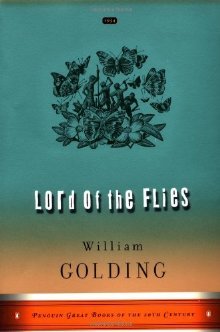
Lord of the Flies
  • Lord of the Flies by William Golding - Children are terrifying. Don't believe me? Read this book and witness the cruelty that they're capable of.


The Killer's Cousin
  • The Killer's Cousin by Nancy Werlin - You don't need to trap kids on an island to get them to commit atrocities. Sometimes, even the best parenting can't prevent tragedy. This book demonstrates the terror you could be saving yourself from by not procreating.


The Sneetches and Other Stories
  • Too Many Daves by Dr. Seuss - This short poem (contained in the good doctor's The Sneetches and Other Stories book) shows that even naming children can be incredibly stressful - and can have lasting consequences if done incorrectly.

What books validate your decision not to have kids? Alternatively, what books encouraged you to procreate? 

Wednesday, November 22, 2017

On how to teach children to read broadly

My aunt is the most organized mother I’ve ever met. Over the summer, she has tasks for each day (“Make Something Monday,” “Science Tuesday,” etc) and throughout the year, the kids take turns planning excursions the family will go on over the weekend. But perhaps her most brilliant move is how she approaches reading with her children.
To begin with, she reads plenty of children’s books so that she can know what’s on the market for kids and so she’ll be able to discuss the books with her kids. Anything she likes, she recommends to the kids who are old enough to enjoy it. She also finds series that are appropriate for all the kids (easier than what the older kids tend to read, but not too difficult for the younger kids to understand) and reads them a few pages each night. Reading is definitely a part of their family. Extended family members know this and often recommend books that they think the kids might enjoy. They are drowning in recommendations - which they love.
In addition to all of this, my aunt has some rules for the weekly library trip. Each time they go, my aunt chooses a genre of book and helps each child find a book at their reading level within the genre. She makes sure to challenge herself by picking out her own book within the genre. Then the whole family picks out the rest of their books and they go home to enjoy their spoils. As they cycle back to a genre, the kids have usually changed their interests or reading level somewhat and move on to find new books. Sometimes the books aren’t great, but sometimes they find new favorites and start basing their reading decisions off that one book their mom made them get.
My cousins not only read a ridiculous amount of books, but they read broadly and have read several books from each genre their mom has thought of - and she’s thought of a lot [sci-fi, historical fiction, fantasy, contemporary fiction, creepy stories (they’re a bit young for straight-up horror novels), various subsets of non-fiction - these kids have read everything].
Not only am I jealous that they’re being forcefully exposed to so many books, but that they have someone with more reading experience and an intimate knowledge of their reading habits that is there to assist them in choosing the right book. I’m also impressed that finding these children good reading material has become a whole family endeavor - for all the cousins, aunts, uncles, and grandparents as well as the children’s own parents and siblings.
I haven’t found a better way to kindly expose children to new reading material while still having some control over what young (and often naive and impressionable) children are reading. I hope this spreads.

How do you encourage young readers to read broadly? How do you encourage yourself to read broadly?

Monday, October 30, 2017

On children's fiction and disability

This post was inspired by a Goodreads list - Children’s Fiction with Positive Images of Disability.
I’ve been looking into books about mental illness and disability lately and this list really intrigued me. It’s difficult enough to find adult fiction that portrays disabilities in an interesting, unique, and positive way, so I was curious as to what children’s fiction would offer. The list both surprised and delighted me. As I write this, there are more than 85 books suggested - which is a pretty substantial amount for any interested young readers.
My post today is entirely based off of this Goodreads list - books I’ve read from it, my thoughts and feelings about the list, and if I’d recommend the books on it. All descriptions are taken from Goodreads. The comments and thoughts are my own.

Top Book
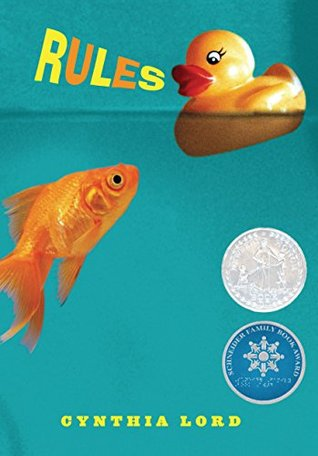
  • Rules by Cynthia Lord
    • A heartfelt and witty debut about feeling different and finding acceptance--beyond the rules.
      Twelve-year-old Catherine just wants a normal life. Which is near impossible when you have a brother with autism and a family that revolves around his disability. She's spent years trying to teach David the rules-from "a peach is not a funny-looking apple" to "keep your pants on in public"-in order to stop his embarrassing behaviors. But the summer Catherine meets Jason, a paraplegic boy, and Kristi, the next-door friend she's always wished for, it's her own shocking behavior that turns everything upside down and forces her to ask: What is normal?
    • I immediately added this book to my TBR when I read it. After working with autistic youth for years, the premise intrigued me and I’m really excited to read this. I can see why it’s at the top of this list.

Books I’ve read
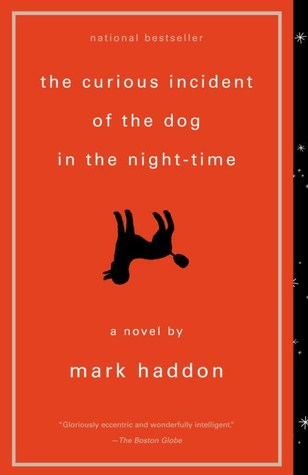
    • Christopher John Francis Boone knows all the countries of the world and their capitals and every prime number up to 7,057. He relates well to animals but has no understanding of human emotions. He cannot stand to be touched. And he detests the color yellow.
      Although gifted with a superbly logical brain, for fifteen-year-old Christopher everyday interactions and admonishments have little meaning. He lives on patterns, rules, and a diagram kept in his pocket. Then one day, a neighbor's dog, Wellington, is killed and his carefully constructive universe is threatened. Christopher sets out to solve the murder in the style of his favourite (logical) detective, Sherlock Holmes. What follows makes for a novel that is funny, poignant and fascinating in its portrayal of a person whose curse and blessing are a mind that perceives the world entirely literally.
    • I read this several years ago and enjoyed it, but it didn’t stand out too much in my mind. I gave it three stars and I could not remember a thing about it until I read the description. I feel like I’d have a different perspective on it now. My memory tells me that this book is similar to Extremely Loud and Incredibly Close by Jonathan Safran Foer.


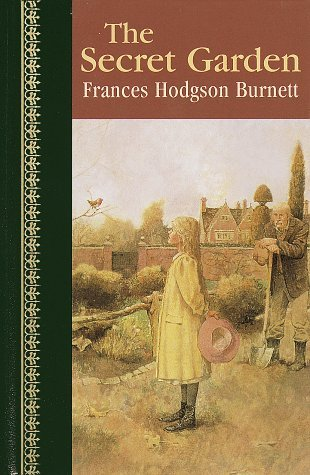
  • The Secret Garden by Frances Hodgson Burnett
    • When orphaned Mary Lennox comes to live at her uncle's great house on the Yorkshire Moors, she finds it full of secrets. The mansion has nearly one hundred rooms, and her uncle keeps himself locked up. And at night, she hears the sound of crying down one of the long corridors.
      The gardens surrounding the large property are Mary's only escape. Then, Mary discovers a secret garden, surrounded by walls and locked with a missing key. One day, with the help of two unexpected companions, she discovers a way in. Is everything in the garden dead, or can Mary bring it back to life?
    • I loved this book as a child and adored the movie even more. Mary’s cousin was sooo much better in the book than in the movie and this is a great perspective on how opinions on disability have changed.


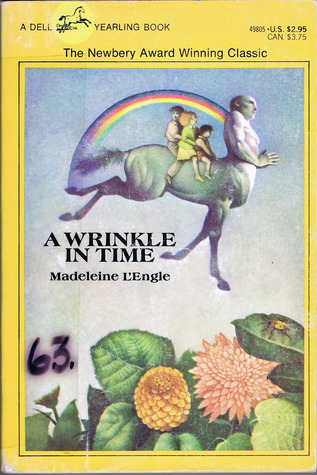
  • A Wrinkle in Time by Madeleine L’Engle
    • It was a dark and stormy night; Meg Murry, her small brother Charles Wallace, and her mother had come down to the kitchen for a midnight snack when they were upset by the arrival of a most disturbing stranger.
      "Wild nights are my glory," the unearthly stranger told them. "I just got caught in a downdraft and blown off course. Let me sit down for a moment, and then I'll be on my way. Speaking of way, by the way, there is such a thing as a tesseract."
      A tesseract (in case the reader doesn't know) is a wrinkle in time. To tell more would rob the reader of the enjoyment of Miss L'Engle's unusual book.
    • I haven’t read this since elementary school, so I had to wrack my brain a bit to find the disability in this book. The only conclusion that I can come to is that it must be Charles Wallace - who ultimately is wonderful and solves things that Meg cannot. This is a must-read.


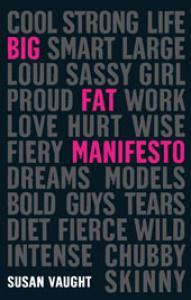
  • Big Fat Manifesto by Sarah Vaught
    • Jamie is in her final year of high school. She's playing the lead role in the school musical. She's the features editor for the student newspaper. She is also struggling with college applications. Jamie is in a committed relationship with her boyfriend, and like so many of her friends, she's trying to work out where she fits in the world.
      She is also enormously, irreversibly, sometimes angrily (and occasionally delightedly) overweight.
      Her most immediate need is a journalism scholarship to college, so she writes an explosive and controversial column every week in the school paper in the persona of Fat Girl. She leaves nothing out - including her reaction to her boyfriend's gastric banding surgery, which aims to help him lose weight but could end up killing him. When her column raises all kinds of public questions, Jamie finds herself fighting for her right to be herself - and not quietly.
      With a new chance at love emerging unexpectedly, and satisfaction in her size losing ground to real frustration, Jamie must find her own private way in the world. At heart is she still Jamie, or is Fat Girl taking over?
    • To begin with, I’m a little confused about why this book is on this list. I don’t classify obesity as a disability (unless it actually completely inhibits someone’s ability to do things), but the main character in this book was not (to my recollection) inhibited enough to consider it a disability. That being said, I didn’t like this book. I didn’t connect with the main character and she irritated me more than she inspired me.


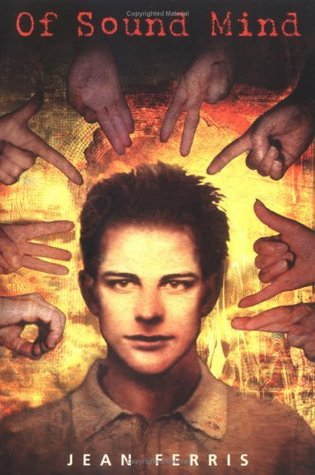
  • Of Sound Mind by Jean Ferris
    • A poignant novel partially set in a world of silence
      High school senior Theo is fluent in two languages: spoken English and sign. His parents and brother, Jeremy, are deaf, but Theo can hear, which has over the years cast him in the role of interpreter for his family. Unfortunately, it's not a welcome duty, especially in the case of his mother, Palma. She is a successful sculptor who, being deeply suspicious of "hearies," expects Theo to act as her business manager. And Jeremy relies on Theo for company and homework help. It's become especially frustrating lately because Theo has met a fascinating new girl at school, Ivy, with whom he wants to spend as much time as possible. Theo's father, Thomas, is the only one who has never burdened him, but that changes when Thomas has a stroke. Palma, frightened and self-absorbed, cannot bring herself to nurse her husband, leaving Theo with the full burden to bear. But with the help of Ivy and some of her friends, Theo is finally able to change his family's dynamics and find time to plan his future.
    • Jean Ferris is one of my all-time favorite authors, so of course I loved this book. It’s believable, it’s touching, and it’s fascinating. Also, Ferris is fantastic. This wasn’t one of her stronger books, but it’s still by her, so it’s wonderful.

What books have you read about disabilities? How do you learn about new books to read? What Goodreads lists are you enjoying?

Tuesday, September 5, 2017

On children's books about school

It’s time for school to start again! Young children who are fairly new to school might be a bit nervous about starting, but here are some books to help them know what to expect and to feel more comfortable with the idea of going to school:

Since I don’t typically read or review children’s book very often, a lot of ideas for this post came from articles here, here, and here. Feel free to look at them for even more ideas about school.

What children’s books about school have you loved? Which books would you add to this list? Are there any you feel like don’t belong?

Monday, June 26, 2017

On gritty middle grade/YA novels

As middle grade readers begin checking out YA books, the transition can be tough. To begin with, YA books deal with much different issues than your typical middle grade novel. YA books also tend to be trendier, grittier, and have very upfront and in-your-face love stories (or bizarre love triangles). Writing for middle grade and for YA is SO DIFFERENT as well - most middle grade is much fluffier and fun, while many YA books use more difficult words and are written in more real voices. For a middle grade reader who doesn’t quite know how to deal with these changes, I have a few suggestions. These are also for anyone who wants a bit of easy, but gritty, reading:
  • Montmorency: Thief, Liar, Gentleman? by Eleanor Updale - While this novel isn’t entirely dark, it has several dark aspects to it. Montmorency makes a Valjean-esque change from rags to riches and spends plenty of time being confronted with his past - while still trying to provide for his future.
  • Among the Hidden by Margaret Peterson Haddix - In a dystopian future not to far from our own world, families are only allowed to have two children. Haddix explores the stories of secret third children - and the terrible danger posed with their continued existence. My mum read these books before I did and highly recommended them when I was young. It was one of the darker books I read at a young age and I remember being somewhat
  • The Last Book in the Universe by Rodman Philbrick - In this Lord of the Flies-esque book, Philbrick shows a dystopian future where children run their own dark society and where some children cannot let go of their traumatic pasts.
  • Lord Loss by Darren Shan - This series is one of the bloodiest I have ever read. For many children, the themes (and bloodshed) in this book may be too intense. The writing is very middle grade and incredibly easy to read. Parents may want to read this book before offering it to their children.
  • The White Mountains by John Christopher - This classic science fiction novel was one of the first chapter books I remember reading. At age 8, it both intrigued and disturbed me. Reviewing it later in life made me realize it wasn’t nearly as dark as it seemed to me when I was young, but for a kid, this book packs a punch. While being easy to read, it can be a lot of very young readers to swallow. Highly recommended for introducing your child to science fiction.

Wednesday, April 12, 2017

On still crying over Sanderson's "The Dark Talent"

There are some books that make you sad. And there are some books that hurt your heart a bit. And there are the books that legitimately make you cry.
And then there’s The Dark Talent (the final book in the "Alcatraz vs. the Evil Librarians" series) by Brandon Sanderson. No other series in existence can destroy a person as completely as this one can. I’ve read plenty of the sad YA novels that fangirls weep over incessantly. Trust me when I say that this is much, much worse.
The series follows young Alcatraz Smedry, who discovers that he comes from a line of royalty with unique Talents. Alcatraz is able to break things better than anyone else he knows. Grandpa Smedry is incessantly late. Some cousins are terrible dancers, some are experts are getting lost, one is even exceptional at spilling water on the floor while doing the dishes (thus ending a drought). The books are hilarious, absolutely ridiculous, and a delight to read. Until the final book.
I’m a huge Sanderson fan and my favorite aspect of his writing is that I never know what’s going to happen. The book that ended closest to how I thought it would was Warbreaker, and I was still way off. I’ve always seen this ability to twist endings as a gift, though I now realize that  Sanderson is deceptive and kind of mean (I’m sure he’s a delightful person in real life, but in his fantasy serieses, he’s insanely cruel). He’s the master of twist endings (so I should’ve seen this coming), but somehow, no one believed he could take it any further than he already had.
And yet he did.
And this scares me. If Sanderson could destroy my soul so much with a children’s series (I repeat - A CHILDREN’S SERIES), how destroyed will I be once “The Stormlight Archives” are finished? Or when he writes Elantris’ sequel? Or when he finally shows us just how intertwined the Cosmere really is? Do I dare read the next book he releases?!
I’m not sure when I’ll be ready to forgive him. But I’m not ready to read him yet. Arcanum Unbound has been sitting on my TBR shelf for months and it’ll stay there for awhile longer. I still need time to heal and to learn to trust again.
So RIP, “Alcatraz” series. It was fun. For awhile.

Monday, April 10, 2017

On soon-to-be- or just-released books with my seal of approval

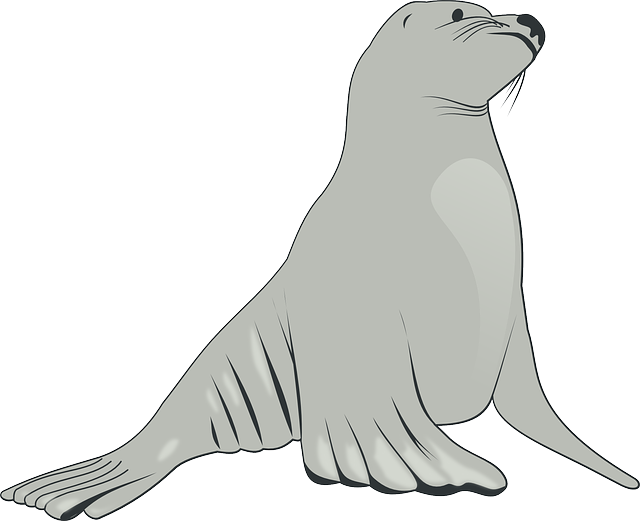
Meet my seal of approval. This majestic being is a tough guy to please, but here are the upcoming releases or book that have just barely been released that he deigned to approve of:
  • How to Stage a Catastrophe by Rebecca Donnelly (April 1st) - I don’t often read middle grade books, but this one caught my eye and captured my heart. The story follows Sidney Camazzalo and his friends as they work to save the children’s theatre they love. The characters are hilarious, the story is ridiculously far-fetched (which is exactly what I liked when I read a lot of middle grade books), and the storytelling is wonderful and memorable. I laughed aloud several times. A must-read for any kids interested in theatre.
  • Change of Seasons: A Memoir by John Oates (April 4th) - Rock ‘n’ roll biographies and histories are some of my favorite books to read and this book was no exception. The first half of it took me a long time to get through - I kept having to convince myself that it was worth finishing. The second half was different - I breezed through it in a night because it was so funny and it was wonderful to learn more about one half of the famous Hall & Oates duo. This reignited my interest in H&O and might have caused a slight crush on John Oates (that stache, though!). I highly recommend this to any H&O fans and anyone with an interest in classic rock/pop should enjoy this as well.
  • A Tyranny of Queens (Manifold Worlds #2) by Foz Meadows (May 2nd) - The second book in the Manifold Worlds series was much better than the first. A fairly straightforward portal fantasy, this series feels like it stepped out of the 1980's in some ways. Full of political intrigue, magic, dragons, and worldwalking, it's a fun and easy to read series. I look forward to reading more by this author - Meadows seems to be getting better with more practice and has a lot of potential in my mind. I recommend this for anyone who loves portal fantasy and who enjoys knowing about up-and-coming fantasy authors first.
  • It’s All a Game: What Board Games Tell Us About the World and Ourselves by Tristan Donovan (May 30th) - This book is AWESOME. As a lover of board games, I felt obligated to try this out and I absolutely adored it. In addition to giving the history of various popular board games, Donovan offers some theories as to how the world was altered because of these games. Tabletop games are growing in popularity these days, so this is a well-timed and delightful book for anyone with an interest in board games (especially if you like chess a lot). If you’re feeling inspired to get into tabletop games, Board Game Quest has some suggestions.

Friday, April 7, 2017

On Jean Ferris and 1960's music

My sixth grade teacher pushed Jean Ferris’ Once Upon a Marigold into my hands one day when I didn’t have anything else to read. I finished it in one day and have spent the years since then reading every Jean Ferris book I can get my hands on. Some of her books are better than others - there are a few I can hardly remember and a few that I’ve read several times. I’ve even bought a handful of her books, which is a BIG DEAL for me.
Love Among the Walnuts is one of her books that I own and that I’ve tried to force upon everyone I know. It was wonderful when I read it in seventh grade and I still love it now. I love it so much, in fact, that I decided to make a playlist for it. A 1960’s playlist (plus one song by a 1960’s band that’s making a comeback).
Why the 1960’s specifically? Because I feel like this book could have happened in the 1960’s - it’s a good balance between old world gentility and some new world shenanigans. Also, this book emphasizes the more positive messages of the 1960’s (how important it is to love and be loved, conflict only brings unhappiness, be your strange and quirky self, etc).
Some of the songs on this playlist are more directly related to characters or the plot and some fit the feel of the book better. Enjoy!

Wednesday, March 22, 2017

Series Review: The Underland Chronicles by Suzanne Collins

Before The Hunger Games, there was Gregor the Overlander, one of the most wonderful, delightful, and dark children’s books I’ve had the pleasure of reading. When my little brother handed this to me in 2005 or 2006, demanding that I read it, I wasn’t expecting much. I should have known better - he has fantastic taste in books (though he doesn’t read as often as he should these days) and always seems to know what I’ll like. We quickly became Underland fanatics, getting our hands on each sequel as soon as we could and staying up far later than our parents approved of to discuss the plot and our predictions. When the final book came out, my brother was vehemently outspoken about his dislike for the ending and stated that he hated the entire series (it’s now been almost ten years and he maintains that the ending ruined everything for him). We respectfully disagreed on this point.
Since then, I’ve probably reread the entire series at least five times. It’s beautiful and brilliant and I can’t get enough of it. When I left for college, I asked for a box set of my own since I couldn’t take the family copies with me (also, they’re all falling apart from being well-loved and well-read by all of us). I’ve forced these books onto several people and have tried to convince several others to give them a chance.
In saying all this, I’m trying to let you know that I’m pretty biased - I absolutely adore these books and I don’t know that I’ll have anything critical to say about them. They’re basically perfect.
To start off, they’re beautifully written. While I don’t like everything Suzanne Collins has written, I can say that she is a talented author and that she deserves the limelight. The descriptions are well done, the word choices are excellent, and Collins has a distinct voice when writing. “The Underland Chronicles” are written for children, but Collins doesn’t talk down to the reader at all. She esteems the reader as an equal and writes as though she’s speaking to a peer rather than a child.
With that attitude, Collins opens the door to handling some rather difficult topics. Gregor, our hero, isn’t perfect and wonderful and superb. He’s actually not someone you’d want to be. When the series starts, he’s the one running the household, watching after his sisters, and trying to stay positive even though he’s a very sad and very confused eleven-year-old boy. Gregor has a tough home life in some non-traditional ways for fantasy - his family loves him and they are close-knit and try to be happy, but the circumstances they’ve found themselves in makes it difficult for them to function as well as they want to. For a children’s book, this is rather heavy. In addition, throughout the series there are several moving and heart-breaking character deaths that are handled with care, though not with condescension. Collins again handles these situations as if writing for a more mature audience, trusting that her young readers are able to handle tragedy. For my brother and I (and our younger siblings, who probably started this series when they were 8 or 9), it was hugely rewarding to be trusted with such serious topics at such a young age. Some parents I lent these books disagreed, feeling that these books were too heavy for young children and held off on suggesting it to their kids until they were older. I was glad that I was able to deal with heavy topics at a young age because this gave me a chance to connect with the world around me more. When Gregor witnesses attempted genocide late in the series, this gives a vivid example of something that young readers will be hearing about for the rest of their lives and makes world tragedies seem more real and accessible.
Collins also makes sure that the adults she writes aren’t perfect. I’ve read too many children’s books that show the adults as all-knowing and all-powerful, which is how children sometimes feel about their teachers and parents. Several adult characters are shown throughout the series to be well-meaning, but deficient in some ways or misguided in others - and not in a “this is a stereotypical adult in a fantasy series” way, but in a very flawed, human way. Gregor is forced to learn who to trust and this gives the reader a chance to do this in their lives as well. This series shows that adults make mistakes and that sometimes, children know what’s right better than the adults. This is shown somewhat humorous throughout the series when Gregor doesn’t believe the prophecies that many Underland adults hold dear. Gregor stands alone in this conviction and is somewhat torn by it until he receives validation from an adult who’s important to him. This doesn’t even happen until the end of the series. Not only does this give the reader a chance to learn that they can (respectfully) disagree with grown-ups, but it shows children that grown-ups often disagree with each other. And that’s okay.
The characters in this series are phenomenal. As I stated before, they’re imperfect and frequently don’t know what they’re doing. People disagree in mature (and sometimes immature) ways, but they can come back from this. We see characters dealing with trauma and disappointment in surprising ways. By the end of the series, no character is the same. Each important character has learned hard lessons and has changed in dramatic ways. And they’re all so human (even the non-human ones). These characters are relatable without being Mary Sue’s or flat and uninteresting. Each character is complex and diverse and memorable and has a surprising depth for a children’s series.
The plot also has a depth that is not seen in many children’s books. In addition to being somewhat heavy, it’s obvious that Collins knows her world and is just giving the reader a taste of it. The plot moves along well and incorporates so many different aspects and areas of the Underland - giving the reader the opportunity to learn as Gregor does. The conflicts throughout the series are intriguing and attention-grabbing and the various plots and subplots stay with the reader long after the series is over. The issues and dilemmas the characters grapple with are so pertinent in 2017 - racism (though it looks more like specism in the series), wars, corrupt politicians, spies, political divisions, etc. It’s a complex series with a complex plot and complex themes - again, Collins is putting more trust in children’s ability to grasp these concepts that most children’s authors do.
Writing this makes me want to read them again. Maybe I’ll rope my brother into reading them with me. And maybe this time, he’ll feel differently about the ending. Maybe he’ll buy his own copy of the series and will love them and read them to tatters like we did growing up. And maybe he won’t this time. But I’ll keep hoping.